
What Is Cable Internet? Understanding Cable Broadband
Understanding what is cable internet also means recognizing its challenges. While cable internet delivers high-speed connectivity through coaxial networks, performance can fluctuate during peak hours due to shared bandwidth. Join Axclusive ISP to explore more in this article.
What is cable internet?
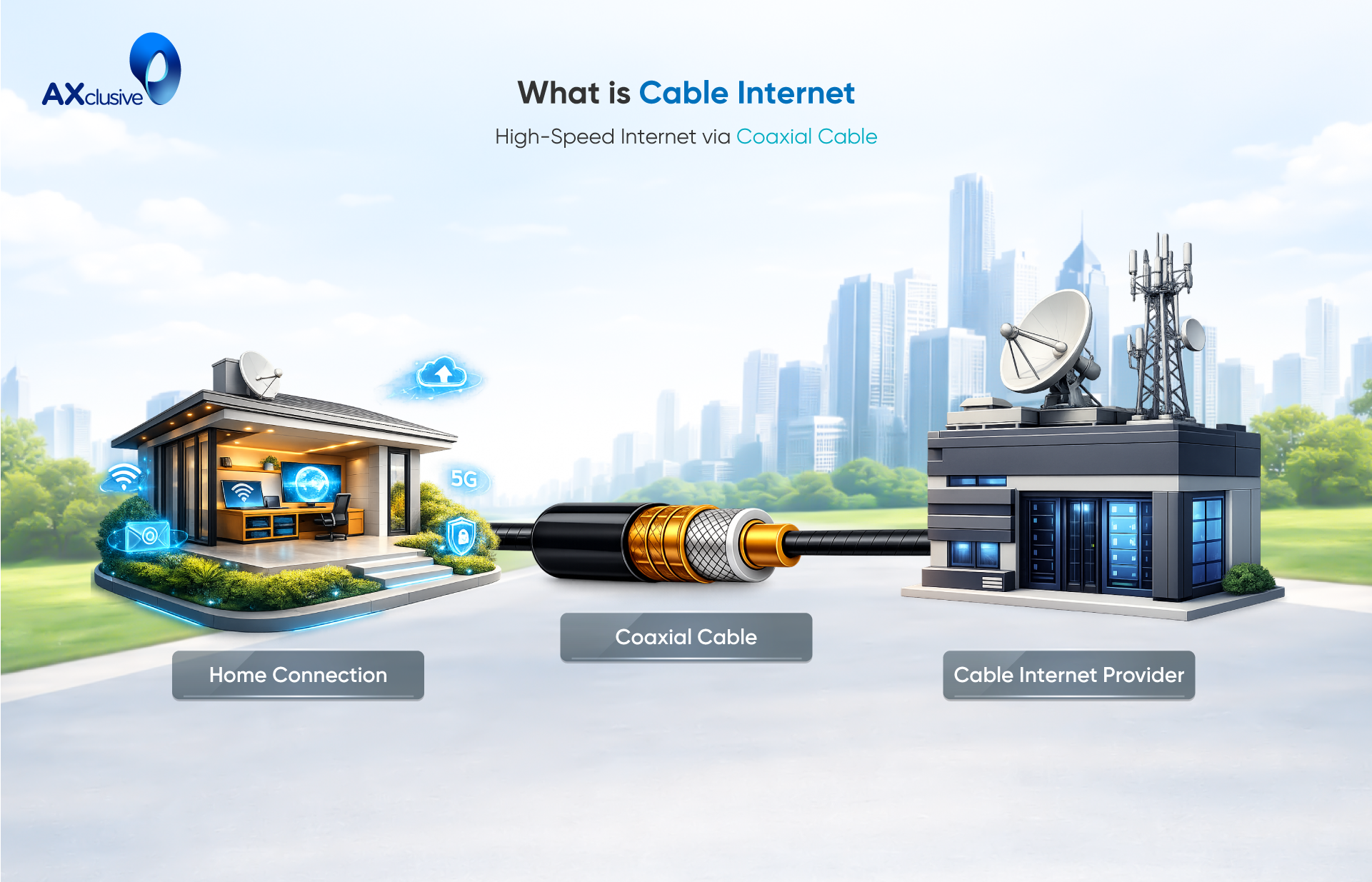
Cable internet is a form of broadband internet service that delivers connectivity through coaxial cable networks originally designed for cable television. It uses the same physical infrastructure to transmit data signals between an internet service provider and a home or building, allowing users to access the internet without dedicated fiber lines.
Because cable internet relies on established television networks, it is widely available in many urban and suburban areas. Internet service providers often offer cable internet as part of bundled packages that include television services, though the internet connection itself functions independently from TV usage.
How cable internet works
Cable internet operates through a combination of network equipment and existing cable television infrastructure. The system is designed to deliver broadband access efficiently to multiple devices within a home or business.
Key components of a cable internet connection include:
- Cable modem: The modem acts as the interface between the user’s network and the internet service provider. It receives data signals from the provider and converts them into a digital format that local devices can use.
- Wi-Fi router: The router connects to the modem and distributes the internet connection to multiple devices at the same time. It supports both wired connections and wireless access within the network.
- Coaxial cables: These copper cables carry data from the provider’s network to the modem. The same cables are used for cable television and support high-frequency data transmission.
- Network switch: A switch expands the number of available Ethernet ports, allowing many wired devices to connect to the network through a single router.
- Ethernet cables: Ethernet cables link devices such as computers, printers, or switches directly to the router or switch for stable and secure connectivity.
How data flows through a cable internet connection:
Cable internet relies on the provider’s existing cable network. Data travels from the internet service provider to a local cable modem termination system (CMTS). From there, signals are transmitted over underground or overhead coaxial cables to the user’s modem. The modem then forwards the data to the router, which distributes it to connected devices.
Devices can access the network either through wired Ethernet connections or through Wi-Fi. Wired connections typically provide consistent speeds and lower interference, while wireless connections offer flexibility and mobility within the coverage area.
Cable Internet Pros and Cons
Cable internet is a widely adopted broadband option, but it is important to assess both its strengths and limitations before choosing it as a long-term connection.
Advantages of Cable Internet
- High-speed performance: Cable internet supports fast download speeds that are suitable for streaming, video calls, online gaming, and multiple connected devices. Most plans provide enough bandwidth for typical household and small business use.
- Broad availability: Because cable internet uses existing coaxial cable infrastructure, it is accessible in many residential and commercial areas without the need for new network construction.
- Bundling opportunities: Many providers offer combined internet and television packages. These bundles can simplify billing and reduce overall service costs.
- Consistent reliability: Cable internet is generally stable and less affected by environmental conditions compared to wireless or satellite-based services. Performance does not depend heavily on distance from the provider, unlike some copper-based alternatives.
- Straightforward installation: Homes with existing coaxial wiring can often activate service quickly. Self-installation is common, though professional installation remains an option for more complex setups.
Disadvantages of Cable Internet
- Infrastructure dependency: A cable internet connection requires coaxial cabling. Locations without existing wiring may face higher setup costs or limited availability.
- Shared bandwidth: Cable networks distribute bandwidth among nearby users. During peak usage periods, network congestion can reduce speeds.
- Usage limitations: Some providers apply data caps or usage policies. Exceeding these limits may result in reduced speeds or additional charges.
Cable Internet Speed
Cable internet delivers broadband connectivity through coaxial cables and is capable of supporting high data rates for everyday online use. Modern cable networks can provide download speeds of up to 1 Gbps, depending on the service plan and local infrastructure.
Actual performance varies based on network conditions and user demand. During periods of low usage, such as off-peak hours, cable internet can maintain stable speeds suitable for streaming, remote work, and multi-device households. The speed a user experiences also depends on factors such as subscription tier, equipment quality, and overall data consumption patterns.
During peak evening hours, network usage increases as more subscribers go online. Because cable internet uses shared infrastructure, higher traffic levels can lead to temporary slowdowns. In addition, data policies, hardware issues, or local service interruptions may affect performance. Understanding these variables helps set realistic expectations for cable internet speed and reliability.
Cable Internet vs Other Internet Types
Cable internet is often viewed as a balanced broadband option, offering a mix of speed, availability, and stability. To understand where it fits best, it helps to compare cable internet with other common connection types used by households and businesses.
Cable vs Digital Subscriber Line (DSL)
Cable internet and Digital Subscriber Line (DSL) are both fixed broadband services, but they rely on different delivery methods. Cable internet uses coaxial television cables, while DSL transmits data over traditional telephone lines.
In terms of performance, cable internet generally provides higher download speeds than DSL. This makes cable more suitable for data-heavy activities such as streaming, online gaming, and multi-device usage. DSL, while slower, often comes at a lower price point and can be a cost-effective choice for basic internet needs.
DSL performance is strongly influenced by distance from the service provider’s exchange. As distance increases, speed and stability tend to decline. Cable internet does not experience this same distance-related degradation, offering more consistent performance across a service area. However, cable connections typically share bandwidth with nearby users, while DSL connections are usually dedicated to a single subscriber.
Cable Internet vs DSL
When comparing cable internet vs DSL more directly, cable stands out for households that require higher speeds and support for multiple users. Cable networks are better equipped to handle modern applications such as video conferencing and cloud services.
DSL remains widely available and may be sufficient for light usage, such as web browsing and email. It can also offer more predictable speeds during peak hours because it does not rely on shared neighborhood bandwidth in the same way cable does.
The choice between cable internet vs DSL often depends on usage needs, budget, and local infrastructure availability.
Cable Internet vs Satellite
Cable internet and satellite internet serve very different environments. Cable internet relies on wired infrastructure and delivers faster speeds with lower latency. Satellite internet uses space-based systems to provide connectivity, making it suitable for remote or rural areas where cable service is unavailable.
Satellite connections can experience higher latency and weather-related interference due to long signal travel distances. Cable internet offers more stable performance for real-time applications and typically supports higher data usage limits.
Cable Internet Benefits
Cable internet remains a popular broadband option due to its balance of performance, coverage, and cost. The benefits below explain why it is widely used by households and small businesses.
Speed
Cable internet supports high download speeds that can reach up to 1 Gbps on modern networks. This capacity allows multiple users to stream video, join online meetings, and play games at the same time. Actual speeds depend on the service plan, provider network, and local usage levels.
Availability
Cable internet is widely deployed in many regions, particularly in cities and suburban areas. Because it relies on existing television cable infrastructure, service is accessible to a large percentage of households without requiring new wiring or construction.
Pricing
Cable internet plans are typically priced to offer strong value for the speeds provided. Providers often offer multiple tiers, allowing users to choose a plan that matches their usage needs and budget. This flexibility makes cable internet a practical option for a broad range of users.
Bundles
Many providers offer bundled packages that combine internet service with television or voice plans. These bundles can simplify billing and reduce overall monthly costs for customers who use multiple services from the same provider.
Installation
Installing cable internet is usually straightforward, especially in locations already connected to cable networks. Many users can complete setup using a self-install kit, while professional installation is available for more complex requirements.
Cable Internet FAQ
What is cable internet vs WiFi?
Cable internet refers to how internet access is delivered to a home or business through coaxial cables from an internet service provider. WiFi, on the other hand, is a local wireless technology that distributes that internet connection to devices inside a building. Cable internet provides the connection, while WiFi enables wireless access to it.
How fast is cable internet compared to other connection types?
Cable internet generally offers faster speeds than DSL and satellite internet, with download speeds that can reach up to 1 Gbps. While it may not always match fiber-optic speeds, cable internet provides strong performance for streaming, gaming, and multi-device households.
Is cable internet suitable for business use?
Yes, cable internet can support many small and medium-sized businesses. It provides sufficient speed and reliability for daily operations, cloud applications, and video conferencing. Businesses with higher uptime or performance requirements may choose dedicated or enterprise-grade services.
Can I use my own modem with cable internet?
In many cases, yes. Most providers allow customers to use compatible third-party cable modems. Using your own modem can reduce monthly rental fees, but it is important to confirm compatibility with your internet service provider before purchasing.
Back to blog